
This story first appeared in the Fall 2025 edition of Northern Ohio Golfer Magazine, the official print publication of the Northern Ohio Golf Association. NOGA members who provide an address in their GHIN account receive a copy mailed to their home twice per year. Not yet a NOGA member? Join for 2026 now!

— instruction by Joe Meglen, PGA, StoneWater Golf Club
Players of all skill levels often ask me, “What should I work on this winter?” And my answer is always the same: It depends on your goals.
After giving more than 30,000 lessons, I’ve seen just about every pattern and every mistake. Over time, I’ve narrowed it down to a few key skills that separate players at each level. Whether you’re trying to break 90, 80, or finally dip into the 60s, your off-season should be focused and built around one main priority.
Here are the specific skills you should work on this winter based on where your game is and where you want it to go.
Breaking 90: Fix Your Swing Plane
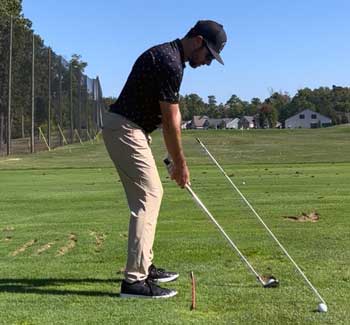 If you’re trying to break 90, it’s likely you’re struggling with a slice or too much fade. As a right-handed player, your shots miss short and right too often. The root of the problem is that your club shaft gets too steep on the downswing and needs to shallow properly.
When the club comes down too steep, you’re swinging across the ball instead of from the inside. That steep path creates weak contact, glancing blows, and inconsistency off the tee. The offseason is the perfect time to fix it and finally learn what a proper path feels like.
Try a simple alignment stick drill. Stick one in the ground just outside your target line slightly behind your right foot, and matching your shaft angle at address. Make slow-motion swings where the club stays under the stick on the downswing. This helps you feel the club working more from the inside, or more to the right through impact, instead of cutting across the ball. As you feel more comfortable with the drill you can hit a ball at slow speeds. Spend time practicing the feel at slower speeds with shorter clubs before going full speed.
If you can control the direction the club is swinging and where it hits the ground, your contact and accuracy will improve fast. Shallow the shaft this winter and you’ll start next season hitting solid shots that fly straighter, longer, and finally help you break 90.
Breaking 80: Three Steps to Better Wedges
 If you live in the 80s, you’re close, but most players in this range don’t hit enough greens, especially when they have a wedge in their hand. They miss too often from 75–130 yards, mostly due to poor or inconsistent contact.
Here are three steps to fix that this winter.
Step 1: Solid Contact on Half Swings
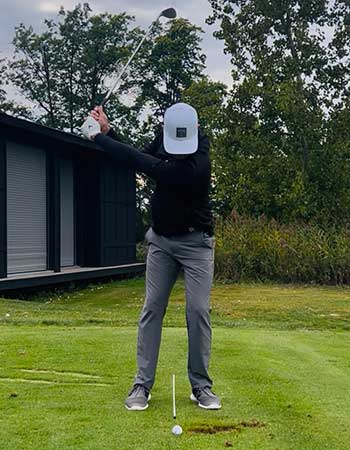
Start by making half swings with your gap or sand wedge. Place the ball in the middle of your stance with a slight forward weight shift, and stay left through the swing. Take small practice swings brushing the ground just ahead of the ball. You can use an alignment stick to make sure your low point is in front of center. This setup and motion move the low point ahead of the ball for clean contact. Notice in the image how far left my body is at the top of the swing — that move sets up the proper low-point position for crisp wedge strikes.
Step 2: Lower Flight
Once you’re striking it solid, work on lowering your trajectory. A lower flighted wedge will tend to produce optimal spin rates making it easier to control distance. To do this, focus on getting the shaft slightly ahead at impact and moving your low point more forward. Keep your weight forward and shorten your follow-through. You’ll feel the ball come out lower, more controlled, and with optimal spin.
Step 3: Control Distance
You can’t control distance until you can control contact and flight. When you’ve nailed the first two steps, start mapping your carry distances using a launch monitor. We use Trackman at Stonewater and I have players hit 10-15 wedges each at 1/2 and 3/4 length using their 50°, 54°, and 58°. We then average the carry and build out their wedge distances for each club and swing length. For example, a half-swing 54 degree might carry 80 yards on average for the player.
If you can strike it clean, flight it down, and hit your number, you’ll start turning scoring clubs into scoring opportunities, and that’s how you break 80.
Breaking 70: Make More Putts
 When you’re chasing 60s, it’s not about fixing your swing, it’s about making more putts inside 15 feet.
On the PGA Tour, players make about 50 percent of their putts from 8 feet. Most single-digit amateurs make around 30 to 35 percent. That difference is a couple of strokes a round, the kind that separates 72 from 68.
We know through putting studies that if your setup or face alignment is off by just a few degrees, the ball will start offline by the same amount, enough to miss from short range. If your putter face is just two degrees open at impact from 8 feet, the ball will miss the hole by two inches.
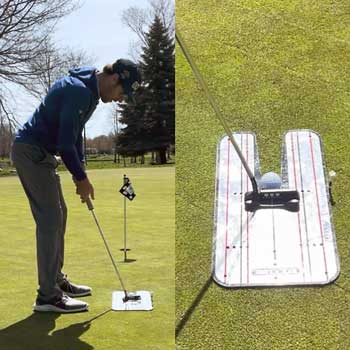
This winter, focus on setup consistency. Use a putting mirror to check your eyes, shoulders, and putter face each session. When your setup repeats, your stroke path and start line control become automatic, and that’s how you transfer putting skill from practice to the course.
If your setup changes from day to day, so will your make rate. Keep it consistent and you’ll start converting the short putts that take rounds from solid to special.
Final Thought
Every player wants to get better, but not everyone works on the right things.
Breaking 90 is about keeping it in play more, a better swing path will do that. Breaking 80 is about hitting more greens, especially with the wedges Breaking 70 is about making more putts from 5-15 feet.
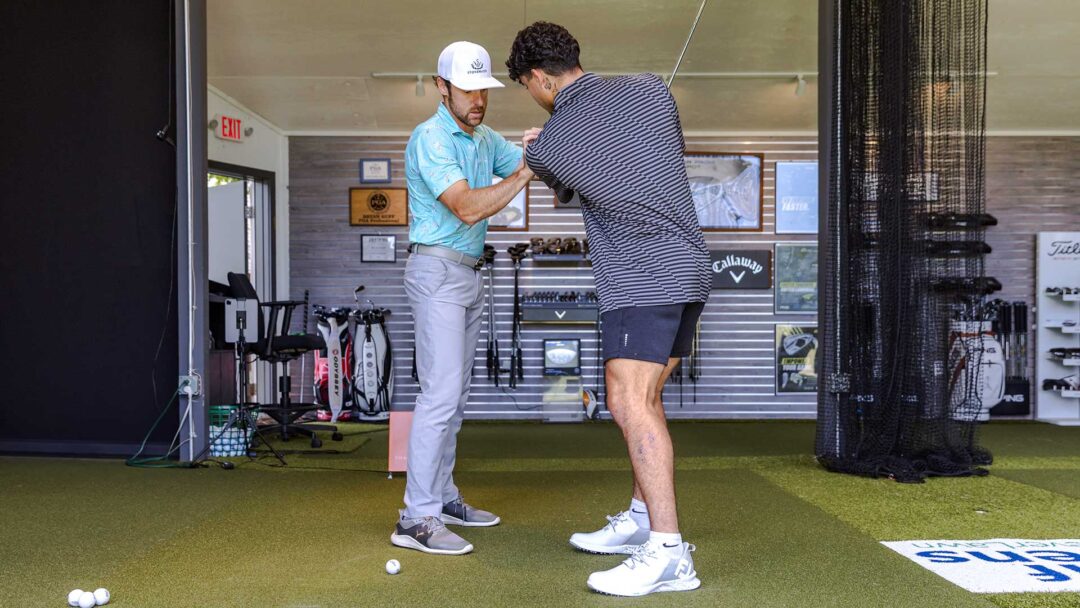
Pick your lane this winter, build your plan, and get ready to play the best golf of your life when spring returns! If you need help building your off-season plan, you can work with Joe Meglen at The Linksman Academy at StoneWater Golf Club or check out his instruction on Instagram.